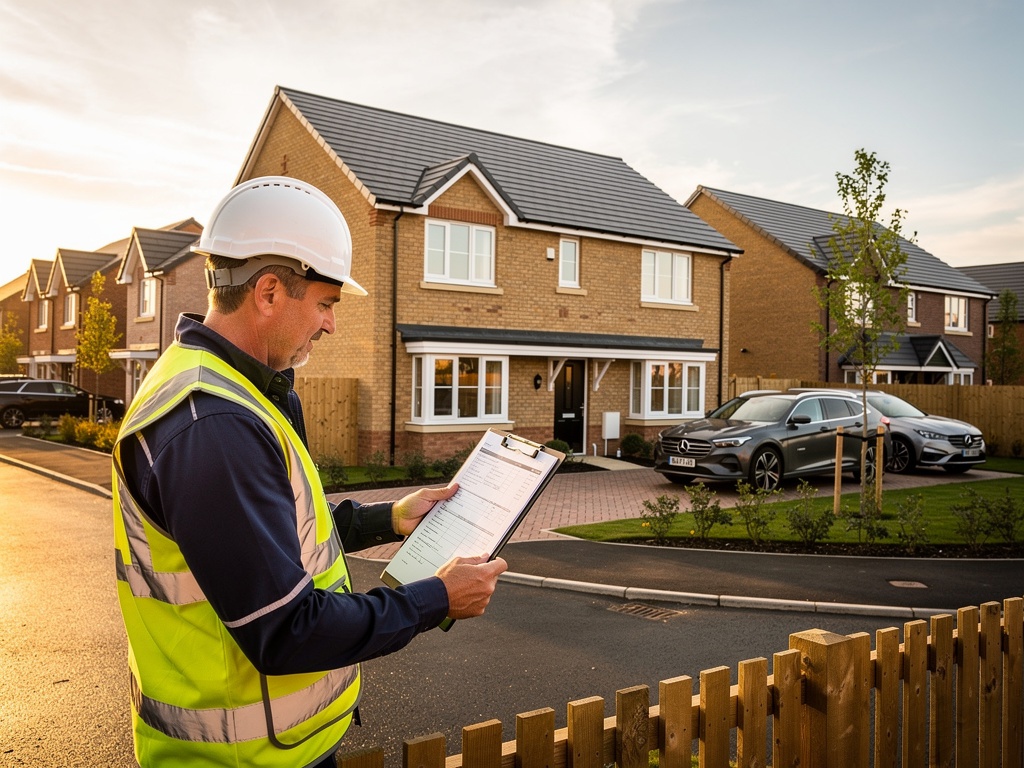
You've just reserved a brand-new home. It smells of fresh paint, every appliance is gleaming, and the developer hands you a glossy warranty pack. Surely the roof is fine? Unfortunately, the reality of new build construction in the UK tells a very different story — and the roof is one of the most common areas where problems are found during independent snagging inspections.
The New Build Warranty Myth
Most new homes in England and Wales come with an NHBC Buildmark warranty, a Premier Guarantee, or a similar product from a third-party warranty provider. Buyers often take enormous comfort from these documents. The 10-year warranty sounds comprehensive — and in theory, it is. In practice, the reality is more nuanced.
In the first two years after completion, the developer is responsible for putting right defects that don't meet NHBC's Technical Standards. From year three to year ten, the warranty covers only major structural defects — the kind of catastrophic failure that causes the building to be uninhabitable. Minor-to-moderate roof defects that cause water ingress, damage to ceilings and walls, or deterioration of the roof structure often fall into a grey area where warranty claims are disputed, delayed, or rejected.
Furthermore, warranty providers assess defects against their own published standards. If a developer has met the minimum standard — even if that standard is low — the warranty may not cover the resulting problem. An independent roof survey gives you an objective, expert assessment of whether your new roof has been built correctly, regardless of what the warranty documentation says.
What Roof Defects Are Common in New Build Properties?
Based on our experience carrying out roof surveys on new build homes across the UK, the following defects come up time and time again. These are not rare edge cases — they are consistent, systemic problems that appear across multiple developers and regions.
Poorly Fixed or Missing Roof Tiles
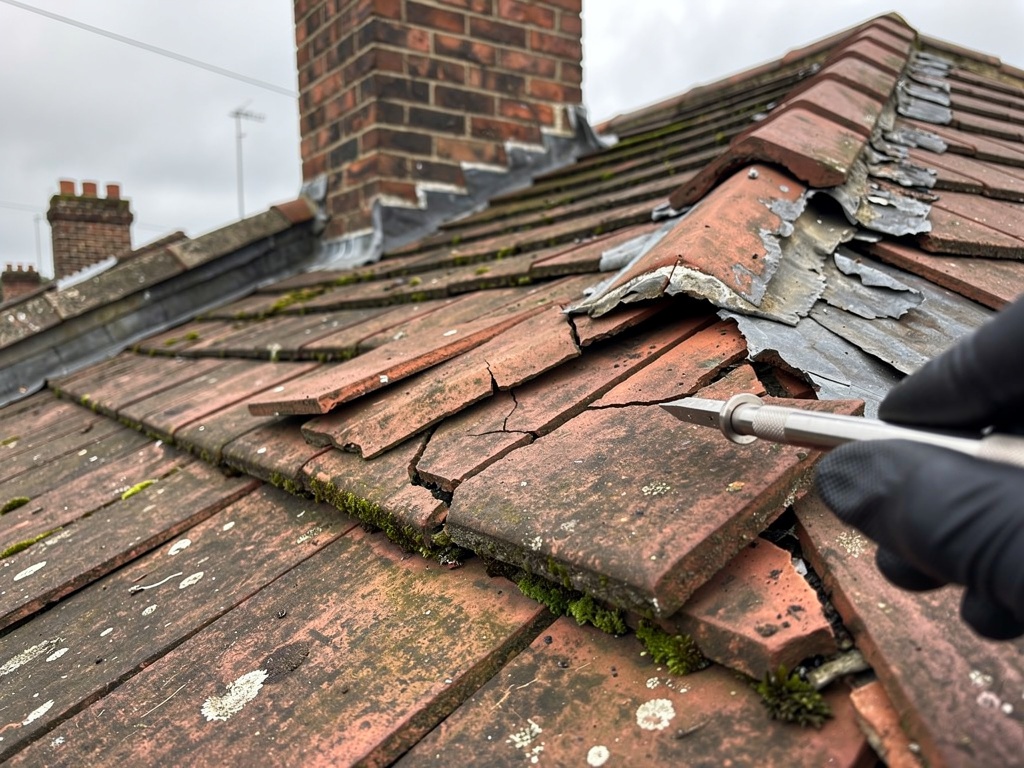
Tiles that are not properly clipped, nailed or bedded are one of the most common new build roof defects. In the rush to complete developments and meet handover targets, roofing gangs sometimes cut corners on fixing. Individual tiles may be loose from day one, and in the first significant wind event, they can be displaced — creating an immediate water ingress risk.
Defective or Poorly Applied Flashings
Lead and code-specified flashing at abutments, verges, valleys and around chimneys or soil vent pipes is critical to keeping a roof watertight. On new builds, we regularly find flashings that have been installed without proper underlaps, secured with an insufficient number of fixings, or applied with poor-quality sealant as a substitute for proper lead soakers. These problems may not manifest as leaks immediately, but they will within a few years.
Inadequate Ventilation
Current Building Regulations require adequate ventilation of the roof space to prevent condensation and the associated risk of timber decay. On many new builds, we find that the specified ventilation tiles, ridge vents or eaves ventilation have been omitted, partially installed, or blocked by insulation. Without adequate airflow, the roof timbers can begin to absorb moisture within months of the property being occupied, leading to rot and structural weakening over time.
Underlay Issues
The breathable roofing underlay beneath the tiles acts as a secondary waterproof barrier. On some new builds, we find that the underlay has been torn during installation, improperly lapped, or installed with insufficient support battening, causing it to sag between rafters. In extreme cases, we've found sections of underlay entirely absent in less visible roof sections.
Shoddy Flat Roof Sections
Many new build homes include a flat or low-pitch roof section over a garage, extension, bay window or utility room. These are frequently finished in EPDM rubber, felt, or GRP fibreglass. Defects here include poorly sealed upstands, inadequate falls causing water to pool, improper application of the membrane at perimeter details, and trim profiles applied without proper adhesive coverage. Flat roof failures on new builds are disproportionately common — and they're often not apparent until the first heavy rainfall.
Ridge and Hip Tile Mortar Defects
Ridge and hip tiles on traditionally laid roofs are bedded and pointed in mortar. When this mortar hasn't been allowed to cure properly before the property is handed over, or when it has been applied in wet or freezing conditions, it can crack and fail within months. Open ridge or hip tiles allow wind-driven rain to enter the roof void, and in winter they allow freezing and thawing to progressively widen the gap.
But Doesn't the Developer Carry Out Snagging?
Technically, yes — most developers carry out some form of pre-completion inspection before handover. But developer snagging and independent snagging are not the same thing. Developer snagging is carried out by the developer's own site team. They have a commercial interest in finding as few defects as possible and completing the handover on schedule. Their snagging list will typically cover cosmetic interior items — scuffed paint, misaligned door handles, incomplete tiling — rather than detailed inspection of the roof structure.
An independent snagging survey carried out by a qualified professional is specifically designed to find everything the developer missed or chose not to flag. And when it comes to the roof — the most expensive element to repair and the least accessible for a new occupant — an independent specialist inspection is by far the most thorough option available to you.
When Is the Best Time to Commission a New Build Roof Survey?
There are two optimal windows for a new build roof survey. The first is before legal completion — specifically, during the period after the property is practically complete but before you exchange final contracts. At this stage, you have the most leverage: if defects are found, the developer must rectify them before you're obligated to complete. This is known as a pre-completion snagging inspection, and it is the most powerful position you can be in.
The second optimal window is within the first 24 months of moving in. During this period, the developer remains responsible for defects under the warranty's first phase. A roof survey carried out in month 18 or 20 — before the two-year window closes — will identify any developing issues while you still have the legal right to require the developer to fix them. Many new build buyers make the mistake of waiting until a problem becomes obvious, by which time the two-year defects period has expired.
Beyond these two windows, the roof survey becomes a standard condition report — still valuable for your own knowledge and planning, but without the same warranty leverage. If you're in year three to ten and suspect a roof problem, the survey can still provide the detailed evidence needed to support a structural warranty claim, though these are more difficult to pursue.
What Does Roof Surveyor London Look For on a New Build?
Our approach to new build roof surveys is adapted specifically for newer properties. Rather than focusing on age-related wear and deterioration — which is the primary concern on older roofs — we look for construction defects, specification non-compliance, and workmanship failings.
Our surveyors arrive with knowledge of the current Building Regulations, relevant British Standards (including BS 5534 for slating and tiling), and the NHBC Technical Standards that govern how new build roofs are supposed to be constructed. We systematically assess each element of the roof against these standards, documenting any deviation with photographs and a clear description of the defect, its probable cause, and the remediation required.
The final report is written to be used directly in correspondence with your developer or warranty provider. It is clear, professionally presented, and detailed enough to support a formal defect notification. We've helped hundreds of new build buyers use our reports to secure developer remediation — saving them thousands of pounds in repairs they would otherwise have had to fund themselves.
Can I Use an Independent Roof Survey Report Against My Developer?
Yes — and it is one of the most effective tools available to new build buyers. A professionally produced independent roof survey report from an accredited surveyor carries significant weight, both in direct communications with your developer and in any formal complaint to the NHBC or an alternative dispute resolution scheme.
Developers are often reluctant to acknowledge defects when challenged verbally or with photographs alone. When presented with a formally structured report from an RPSA or RICS-accredited surveyor, clearly documenting specific defects with reference to relevant standards, most developers are far more inclined to engage constructively. If they are not, the report becomes key evidence in any escalation to the NHBC, the Housing Ombudsman, or — in the most serious cases — legal proceedings.
Independent Means Unbiased
Roof Surveyor London has no commercial relationship with any developer or roofing contractor. Our reports reflect only what we find on the day — nothing more and nothing less. We have no reason to minimise defects for a developer's benefit, and no financial interest in inflating them either. That independence is what makes our reports credible and effective.
How Much Does a New Build Roof Survey Cost?
A specialist new build roof survey from Roof Surveyor London typically costs between £300 and £550 for a standard detached or semi-detached property. Larger properties, those with complex roof designs, or those requiring drone access for inaccessible sections may be priced higher. We always provide a fixed quote upfront — no surprises.
To put that cost in context: the most common new build roof repair we encounter — fixing defective flashings and re-securing loose tiles — typically costs between £500 and £2,500 when carried out at the buyer's own expense. Getting the developer to fix it before or shortly after handover costs you nothing beyond the survey fee. The return on investment is straightforward.
My developer says the NHBC warranty covers everything — do I still need a survey?
The developer says they won't allow an independent surveyor on site before completion. What should I do?
Is a new build roof survey different from a snagging survey?

Sarah specialises in new build property inspections and has assessed roofs on developments by most of the UK's major housebuilders. She holds RPSA accreditation and has helped over 800 new build buyers secure developer remediation through her detailed survey reports.
Book Your New Build Roof Survey
Independent specialist inspections available across the whole of the UK. Fixed price, no obligation quote. Reports delivered within 48 hours.
Related Articles: Roof Survey vs Structural Survey | What's in a Roof Survey Report? | How Much Does a Roof Survey Cost?