
Managing rental property in the UK comes with a long list of legal and practical responsibilities. The roof sits near the top of that list. Unlike a leaking tap or a broken appliance — things tenants notice immediately and report quickly — roof defects often develop silently, becoming expensive emergencies before anyone realises there's a problem. A regular independent roof survey is one of the most cost-effective tools a landlord can use to stay ahead of these risks.
What Are a Landlord's Legal Responsibilities for the Roof?
Under the Landlord and Tenant Act 1985, private landlords in England and Wales are legally required to keep the structure and exterior of a dwelling in repair. This explicitly includes the roof. If a tenant suffers harm, loss of enjoyment, or damage to their belongings as a result of a disrepair to the roof that the landlord knew about — or should have known about — the landlord can face civil liability, financial penalties, and in serious cases, prosecution.
The Housing Health and Safety Rating System (HHSRS), which environmental health officers use when assessing rental properties, includes "damp and mould growth" as one of its most serious hazard categories. Water ingress from a defective roof is a primary cause of Category 1 HHSRS hazards — the most serious type, which can result in a local authority issuing an Improvement Notice requiring specific works within a set timeframe. Failure to comply with an Improvement Notice can result in substantial fines or even criminal prosecution.
In Scotland, the Repairing Standard (Housing (Scotland) Act 2006) requires landlords to ensure the structure and exterior of a property are in a reasonable state of repair and in working order. Roof condition is explicitly included. The Private Rented Housing Panel (now the First-tier Tribunal for Scotland) can require landlords to carry out repairs and award compensation to tenants where the standard is not met.
Important: "I didn't know the roof was leaking" is not an adequate legal defence if a tenant reported dampness, if visible deterioration was present on inspection, or if the roof had not been assessed for many years. Landlords are expected to take reasonable steps to identify and prevent disrepair — not just react to it when it becomes obvious.
Why Reactive Maintenance Is Always More Expensive Than Prevention
The financial logic of regular roof inspections is straightforward, but many landlords still operate on a purely reactive basis. They wait for a tenant to report a leak, call a roofer, pay for emergency repairs, and sometimes discover that what appeared to be a minor issue has been silently developing for years and now requires major work.
The typical cost trajectory for an undetected roof defect looks like this: a small area of failed flashing, if caught early, might cost £150–£300 to repoint and re-seal. Left unattended for two years, the water ingress may have rotted the underlying timber, damaged ceiling joists, caused persistent mould growth on bedroom walls, and soaked the loft insulation. The same job now involves scaffold, timber replacement, replastering, redecoration, and insulation replacement — potentially £3,000 to £8,000 or more, plus possible rent arrears or compensation to your tenant.
A structured programme of regular independent roof surveys — typically every two to three years for properties in good condition, annually for older properties or those with known vulnerabilities — interrupts that cost curve at its earliest, cheapest point.
When Should a Landlord Commission a Roof Survey?
Before Purchasing a Buy-to-Let Property
A pre-purchase roof survey is one of the most valuable investments a buy-to-let buyer can make. Knowing the exact condition of the roof before you exchange contracts lets you either negotiate the price down to account for required works, ask the vendor to complete specific repairs before completion, or walk away from a property whose roof condition makes it a poor investment.
At the Start of a New Tenancy
Commissioning a roof survey at the start of a new tenancy creates a documented baseline. If the tenant later reports roof-related issues, you have an independent record of the condition at commencement. This is particularly useful in disputes about what constitutes tenant damage versus pre-existing disrepair.
After Severe Weather Events
High winds, heavy snowfall, or hailstorms can cause sudden roof damage that isn't always visible from ground level. A post-storm roof survey ensures you identify and address damage quickly — both for your tenants' safety and to prevent secondary water damage from developing into a larger problem.
Every 2–3 Years as Routine Maintenance
For properties in good condition, a routine survey every two to three years catches gradual deterioration before it becomes acute. For Victorian or Edwardian properties, or properties with flat roof sections, annual surveys are often a more prudent investment given the age-related vulnerability of these roof types.
When Planning a Refurbishment or Extension
If you're extending a property or carrying out significant works, understanding the exact condition of the existing roof is essential. It avoids the unpleasant discovery mid-project that the original roof is not in a condition to tie into, which can derail timelines and budgets significantly.
What a Roof Survey Finds on Rental Properties
Rental properties often have a specific defect profile that reflects the realities of tenanted occupation. Our surveyors consistently find certain issues more frequently on rented properties than on owner-occupied homes. Understanding these patterns helps landlords target their maintenance spend more effectively.
Guttering and drainage. Tenants don't clean gutters. This isn't a criticism — it's simply not something most renters consider their responsibility, and in most tenancy agreements, it isn't. Blocked gutters lead to water overflowing into cavities and around window and door frames, causing dampness that presents as mould growth inside the property. Regular gutter clearance — which we identify and recommend as part of every roof survey — prevents a large proportion of the dampness complaints we see on rental properties.
Flat roof sections over extensions. Many terraced houses and semis have been extended by previous owners, often with a relatively low-cost flat roof. These roofs typically have a working life of 15–20 years, and many in the rental stock have reached or exceeded it. They become progressively less watertight, with water eventually finding its way through into the kitchen or bathroom extension below. Our surveys identify the condition of flat roof membranes and predict the remaining useful life, letting landlords plan replacement on their terms rather than in emergency conditions.
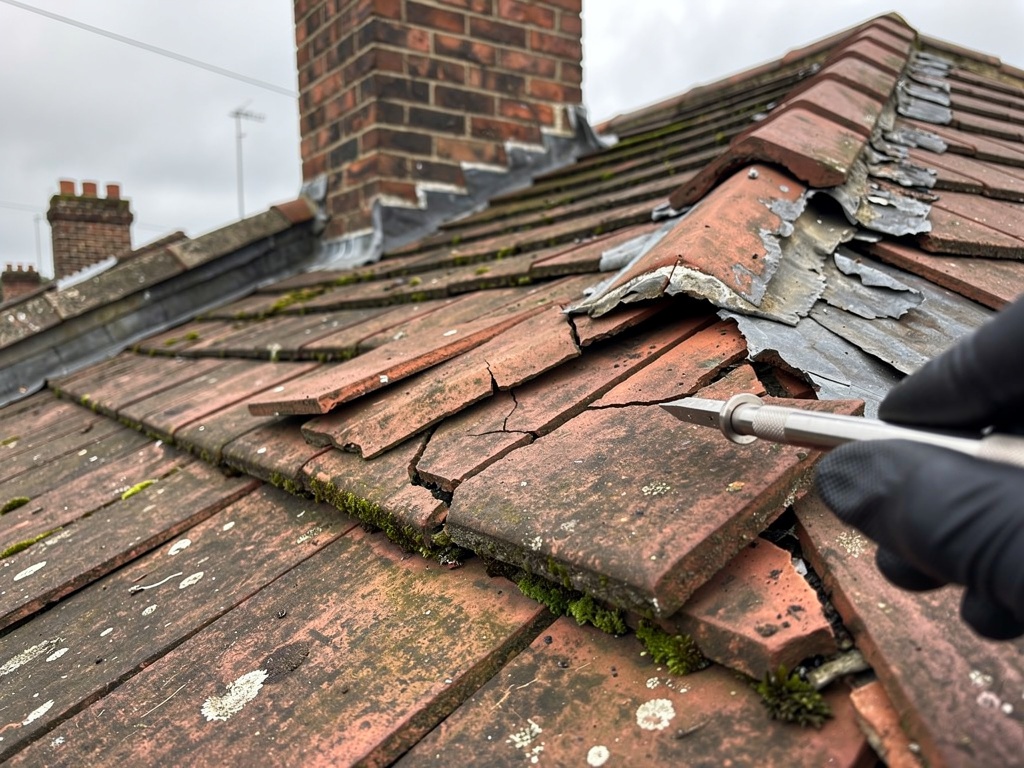
Chimney stacks. Many rented properties have chimney stacks that are no longer in use but remain structurally present. Unused chimneys still require maintenance — pointing, flashing, and cap-off or pot maintenance — but they're often neglected because there's no fireplace in use below. Deteriorating chimney stacks are one of the leading causes of water ingress in Victorian terrace rental stock across the UK.
Tax Implications: Is a Roof Survey an Allowable Expense?
This is a question many landlords ask. The short answer is that independent roof surveys are generally an allowable expense for tax purposes, deductible against rental income, because they are incurred wholly and exclusively for the purpose of the rental business. The cost of surveys, and of repairs identified through surveys, is typically deductible from rental income when calculating taxable profits.
However, there is an important distinction between repairs (generally deductible) and capital improvements (not directly deductible, but potentially qualifying for capital gains relief on disposal). Replacing a worn roof like-for-like is a repair; significantly upgrading the roof using superior materials may be considered a capital improvement. If you're uncertain, your accountant can advise on the treatment of specific costs in your circumstances.
The practical point is that the cost of a roof survey is modest relative to the potential cost of the problems it identifies — and the survey fee itself is an unambiguously allowable expense that reduces your taxable rental income.
Managing Multiple Properties: Portfolio Surveys
If you own multiple rental properties, managing roof maintenance across a portfolio can feel overwhelming. Roof Surveyor London works with landlords who manage anywhere from two to two hundred properties, providing structured portfolio survey programmes that prioritise properties by risk, age, and condition.
A portfolio approach allows you to schedule surveys in batches, receive standardised reports across all properties that make condition comparison straightforward, and budget for required repairs across the portfolio rather than facing unexpected emergency costs. Many of our landlord clients schedule portfolio surveys annually in the spring — after winter's weather has done its worst — so they can plan and budget for the year ahead with accurate information.
The Landlord Cost Case in Numbers
A roof survey for a standard three-bedroom terraced rental property typically costs £350–£450 with Roof Surveyor London. Run annually on a portfolio of 10 properties, that's £3,500–£4,500 per year — a tiny fraction of the average cost of a single emergency roof repair or the legal costs associated with a tenant disrepair claim. Most landlords who implement a regular survey programme find they save significantly more than the survey costs within the first two years.
What Happens If You Ignore Roof Problems in a Rental Property?
The consequences of ignoring a known or suspected roof defect in a rental property extend well beyond the cost of the repair itself. In England and Wales, tenants have an increasing range of remedies available when landlords fail to maintain their properties. The Homes (Fitness for Human Habitation) Act 2018 gives tenants the right to take their landlord to court if a property is not fit for human habitation — a category that clearly includes persistent water ingress through a defective roof.
Courts can order landlords to carry out works and can award damages to tenants for inconvenience, distress, and damage to belongings. In cases where a landlord has knowingly failed to act, damages can be significant. Add to this the reputational damage from a formal complaint, the risk of losing your licence to rent in a licensed area, and the disruption of having a property empty during repair works, and the cost of simply staying on top of your roof becomes very clear.
How often should a landlord inspect a rental property's roof?
Do I need to tell my tenant I'm having the roof surveyed?
Can Roof Surveyor London survey multiple rental properties in one day?

James has extensive experience working with landlords and property managers across the UK, having surveyed properties in portfolios ranging from 2 to 150 units. He understands the commercial and legal pressures facing private landlords and writes reports designed to be practically useful in a property management context.
Landlord Roof Survey Enquiry
Whether you have one rental property or a large portfolio, Roof Surveyor London can help you manage roof condition across your investments. Get in touch for a tailored quote.