Roof Surveyor London surveys hundreds of properties every year across the UK. And again and again, we see the same thing: problems that started small and were ignored until they became very expensive indeed. A missing ridge tile left unattended for two winters. A blocked gutter that eventually rotted the fascia board and then the rafter end behind it. A flat roof blister that was spotted a year ago and never got looked at.
Roofs don't usually fail suddenly. They give warnings. The trouble is that most homeowners either don't know what to look for or assume everything is fine because "the roof looks okay from the ground." Spoiler: it usually doesn't from up close.
Here are the ten early warning signs your roof needs professional attention — and why acting on them quickly makes a big financial difference.
1. Missing, Cracked or Slipped Tiles
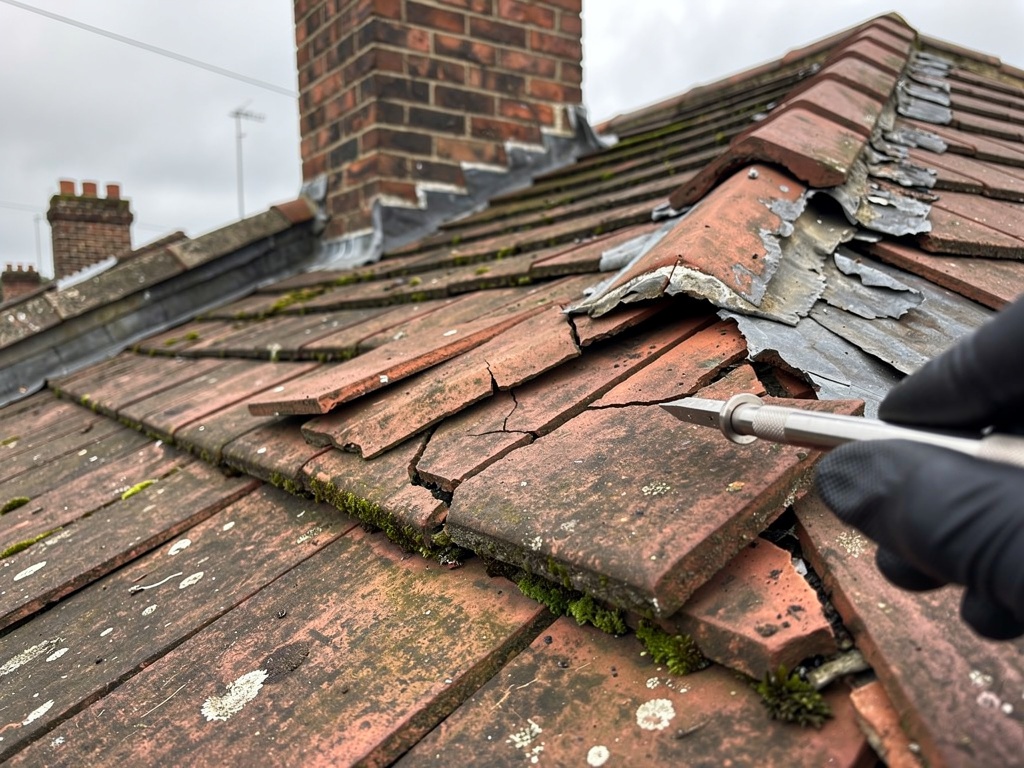
This one sounds obvious, but you'd be surprised how many people spot a missing tile or two and put it off for "the spring." In the UK climate, a missing tile means exposed underlining felt. Felt deteriorates quickly when wet. Once the felt is gone, rainwater has a direct route into your roof space, insulation and ceiling structure. A missing tile costs £80–200 to replace. The water damage it can cause costs many times that.
Look for tiles that sit at an odd angle, have visible gaps on either side, or appear noticeably darker than the surrounding tiles (suggesting dampness beneath).
2. Damaged or Crumbling Ridge Tiles
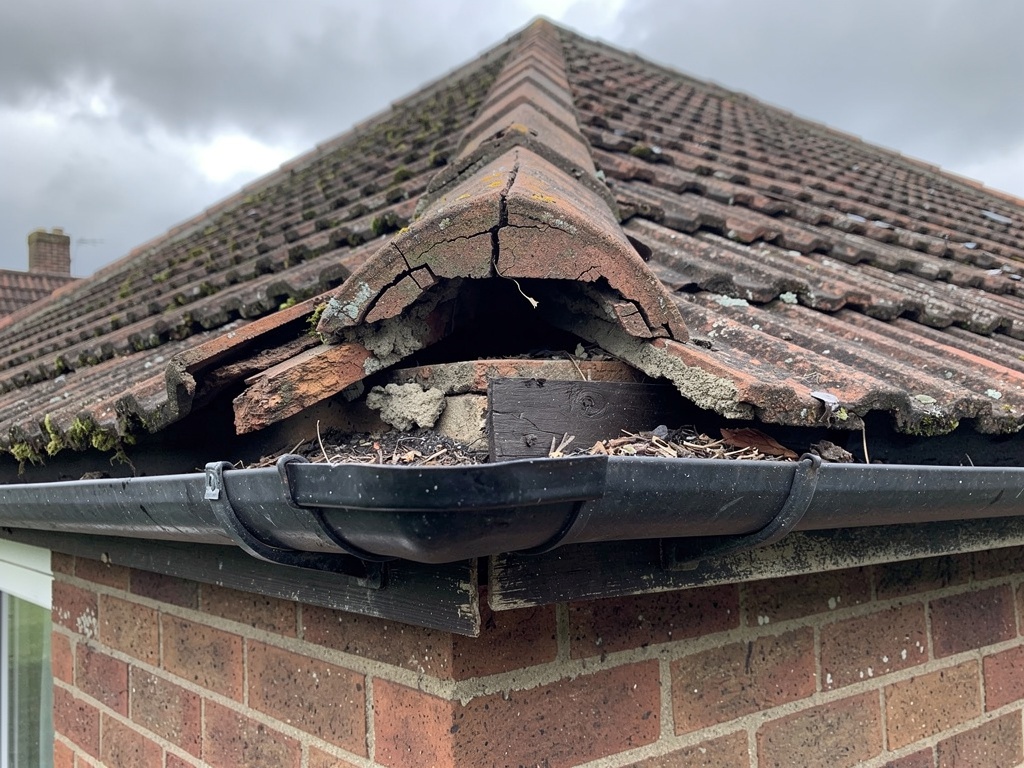
The ridge tiles run along the apex of your roof and are typically bedded in mortar. Over time — particularly in older properties — that mortar deteriorates, allowing the tiles to loosen. A loose ridge tile can fall, causing serious injury or damage. Failed mortar also allows water to track down into the roof structure. This is one of the most common defects we find in UK properties over 25 years old.
3. Blocked or Overflowing Gutters
Stand outside your property during or after heavy rain. If water is cascading over the front or back of your gutters rather than flowing through the downpipes, they're blocked. Blocked gutters don't just look untidy — they cause water to back up and saturate the fascia boards, soffits and ultimately the wall beneath. Over time this causes rot, damp and structural damage. This is the single most common defect we find across all survey types.
4. Sagging Roof Line
Stand back from your property and look at the roof line from the side. It should be straight and even. Any dip, sag or undulation in the roof plane is a sign that the structure beneath — rafters, battens or the ridge board — may be under stress or have deteriorated. This needs immediate professional assessment. A sagging roof line is never a cosmetic issue.
5. Daylight in the Loft Space
If you can safely access your loft, go up there on a bright day and look towards the roof. Any daylight visible through the roof covering — other than through a properly fitted loft window — means there's a gap. That gap lets in water and wind-driven rain. It also invites birds, bats and mice. If you see light, you need a professional inspection.
6. Damp Patches or Stains on Ceilings
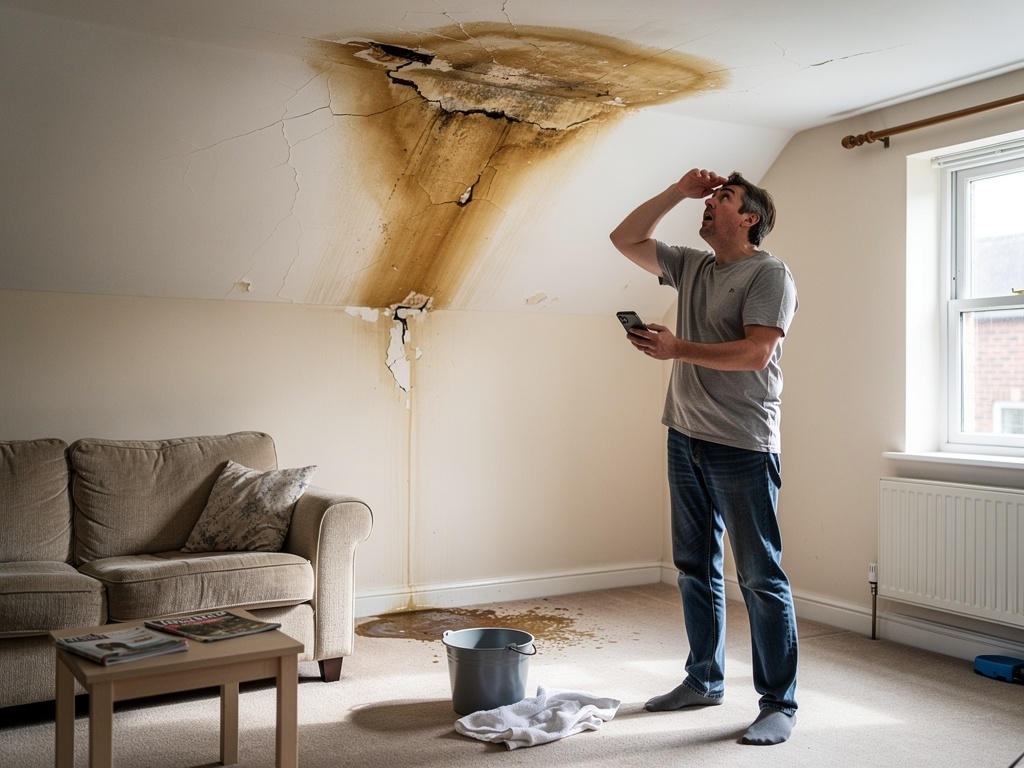
A damp patch on a top-floor ceiling is the most obvious sign that your roof is allowing water ingress. But here's the thing people don't always realise: the stain on your ceiling is rarely directly below the point of entry. Water tracks along rafters and joists before it finds somewhere to drip. So even a ceiling stain on the ground floor can indicate a roof problem. Don't assume it's just condensation and ignore it.
7. Failed or Missing Flashing
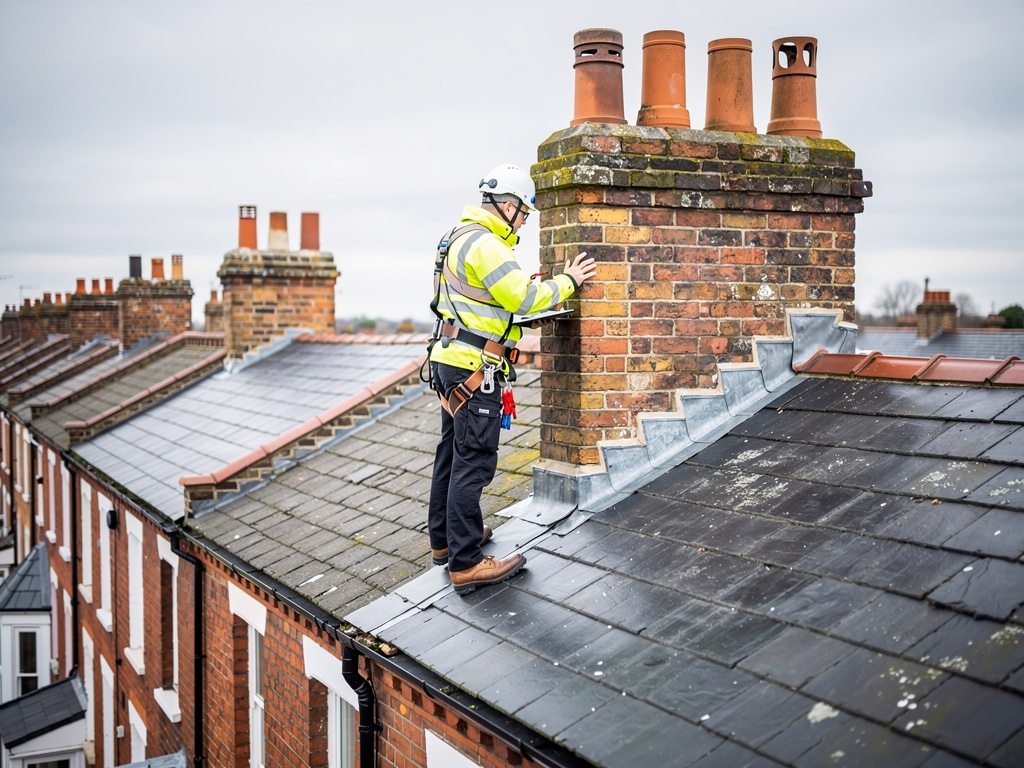
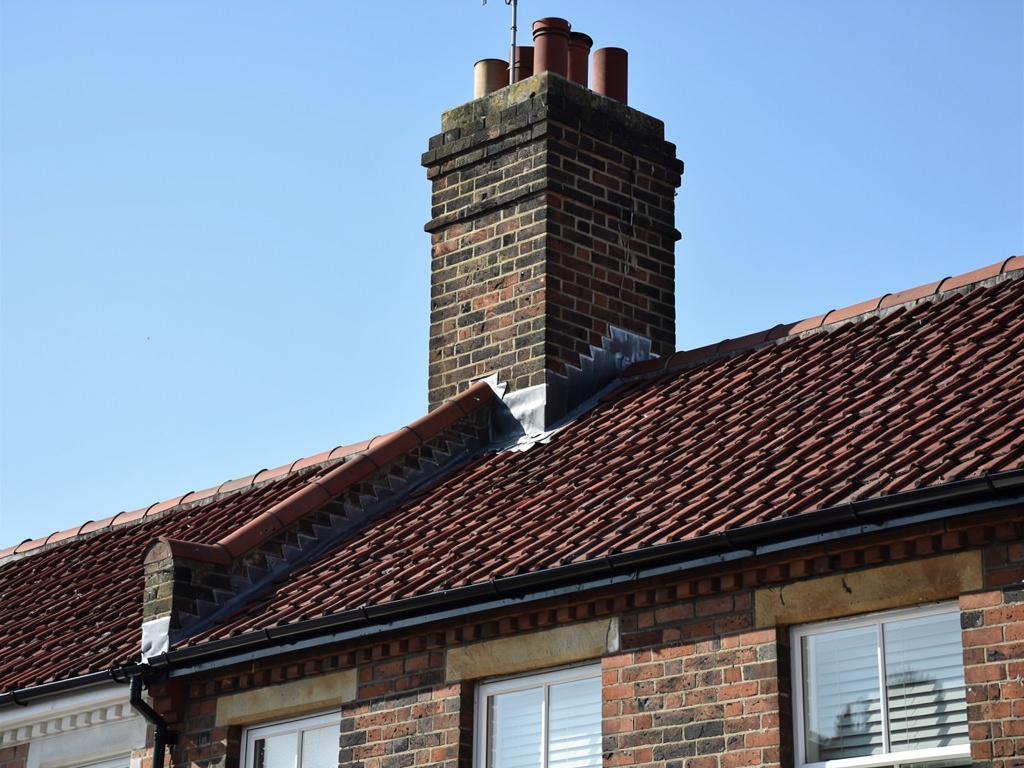
Flashing is the lead or aluminium strip that seals the joint between the roof covering and a wall, chimney, dormer or skylight. When flashing fails — whether through cracking, lifting or poor installation — it creates a direct water entry point. It's a particularly common issue around chimneys and where a lean-to roof meets the main house wall. Failed flashing is responsible for around 34% of the roof leaks we investigate.
8. Mossy or Algae-Covered Tiles
Some moss on a roof is normal, particularly in damper parts of the UK. But heavy moss growth retains moisture against the tile surface, accelerating freeze-thaw cycles and eventually causing tiles to delaminate or crack. Significant moss also traps debris, blocking the natural runoff channels between tiles. If more than a third of your roof surface is heavily mossy, a professional assessment is worthwhile.
9. Blistering on Flat Roof Surfaces
If you can see or access a flat roof — perhaps over a garage, kitchen extension or utility room — look for blistering, bubbling or delamination of the surface membrane. Blisters form when moisture becomes trapped between layers of the roofing system. They indicate that the membrane's integrity has been compromised. Left untreated, they rupture and allow full water ingress. Flat roof blisters that are caught early are a maintenance job; left long enough they require complete roof replacement.
10. Increased Energy Bills Without Obvious Cause
This one takes people by surprise. If your heating bills have increased noticeably without a change in behaviour, it can sometimes be traced to failing roof insulation caused by water ingress. Wet insulation doesn't just fail to insulate — it actively draws heat out of the space above your ceiling. If your energy bills have crept up and you can't account for it, a roof survey and loft inspection is worth considering.
What to Do If You Spot Any of These Warning Signs
If you spot one or more of the issues above, the best first step is a professional independent roof survey. Don't call a roofer and ask them to "have a look" — a roofer has a commercial interest in finding work. Our surveyors are completely independent. We assess and report; we don't sell repairs.
A full roof condition survey from Roof Surveyor London will give you a clear, prioritised report on every element of your roof — delivered within 48 hours. If repairs are needed, you'll have the independent evidence to get accurate quotes from trusted contractors. If everything is fine, you'll have confirmed that peace of mind in writing.
To book a survey or request a free quote, get in touch with our team today. We cover the whole of the UK and can usually arrange a survey within 3 to 5 working days.